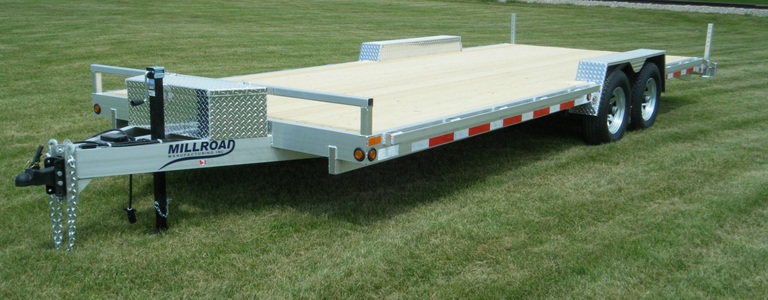
You may look at an empty trailer and think all its rated capacity remains available for cargo. However, the frame, deck, axles, wheels, tires, hitch parts, ramps, and installed options already have weight. That empty weight uses part of the unit’s total capacity before you load a machine or a single piece of material.
You need to compare empty weight with the gross vehicle weight rating, or GVWR, to estimate available payload. A lightweight aluminum trailer in Canada design may leave more capacity for cargo than a heavier model with the same GVWR. However, the tow vehicle, hitch, axles, tires, brakes, and load placement can create lower limits.
At Millroad Manufacturing in Brucefield, Ontario, we help buyers compare these numbers with their trucks and regular loads. Our aluminum models are built for homeowners, farmers, contractors, landscapers, and other people who need dependable hauling options. In this blog, we explain how empty weight affects payload, how towing limits work together, and what you should compare before choosing a Millroad model.
Yes, a lightweight aluminum trailer can allow you to carry more cargo than a heavier trailer with the same GVWR because less total capacity is used by the empty unit. However, you must still remain within all axle, tire, hitch, and tow vehicle limits, as well as account for any installed options and equipment.
Empty weight is the amount the hauling unit weighs before you place cargo on it. This weight already uses part of the total rated capacity. Several major components contribute to that number.
Two units in the same product category may not have the same empty weight. Their dimensions, axle setups, features, and options must all be considered.
Payload is not the same as GVWR. GVWR is the maximum rated weight of the loaded trailer itself. Payload is the capacity that remains after the empty weight is subtracted.
The calculation provides a starting point, but it does not confirm that the load is safe or legal. Load placement and every related vehicle rating still matter.
Available deck payload is only one part of the towing calculation. Your truck must support the complete combination. The lowest rating in the system becomes the practical limit.
You should use specifications for your exact truck rather than relying on a general towing claim. Model year and equipment package can make a major difference.
A large machine may not be the only weight placed on the deck. Attachments, tools, materials, and supporting equipment also count. A load can fit within the available space and still exceed an important rating.
Physical deck space does not confirm available payload. The cargo must fit both the size and weight limits of the complete setup.
Aluminum is lighter than steel by volume. This allows manufacturers to build strong hauling products with lower empty weights in many comparable designs. When two models have the same GVWR, the lighter one may preserve more of that rating for cargo.
You still need to compare similar products. Deck length, frame design, axle setup, reinforcements, options, and ratings may differ. Comparing a small aluminum utility model with a large steel equipment hauler would not provide a useful answer.
Aluminum also resists rust and oxidation, which can be helpful in Canadian working conditions. However, buyers should avoid fixed promises about fuel savings. Vehicle choice, speed, wind, hills, weather, driving habits, and cargo weight can all affect fuel use.
A lightweight aluminum trailer in Canada should be viewed as one part of a complete hauling system. It still needs to match the intended cargo, truck, hitch, loading method, and regular workload.
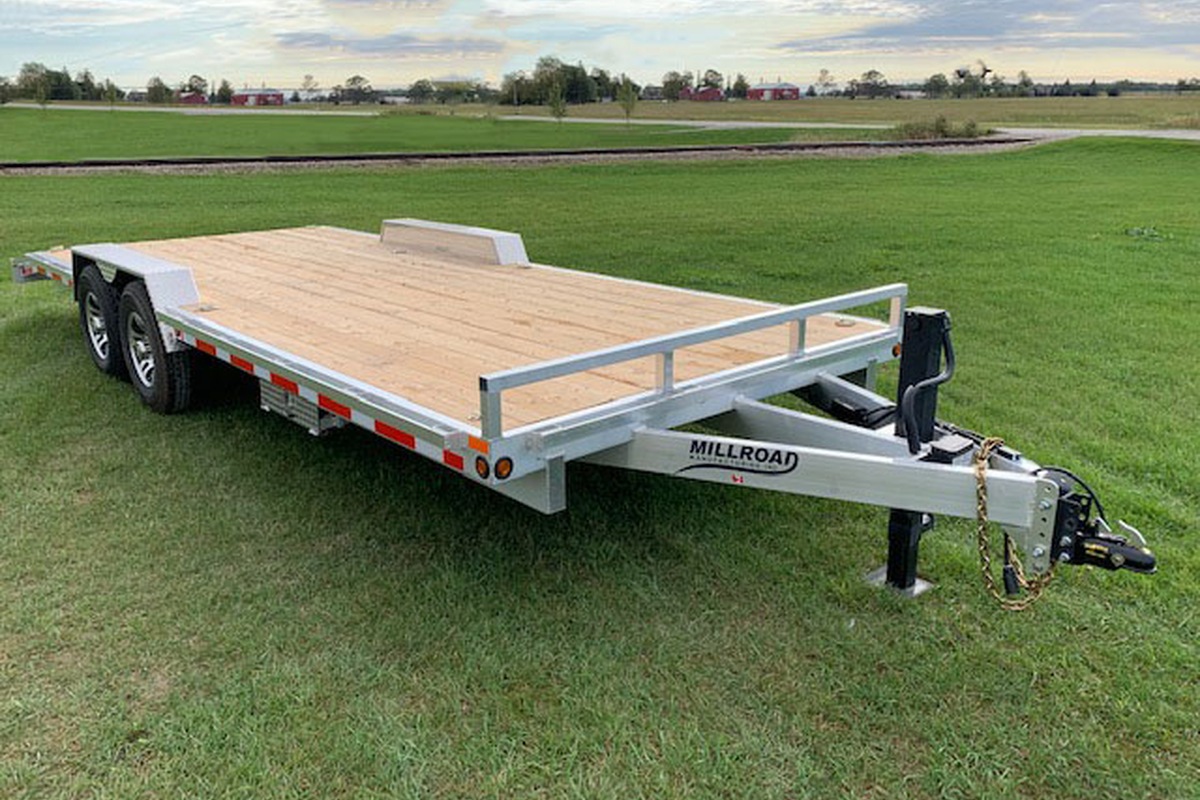
You can begin by collecting the specifications for your current steel trailer. Record its empty weight, GVWR, deck dimensions, axle ratings, installed options, and calculated payload. You should also list the heaviest and most common loads you carry.
Next, compare those details with a similar Millroad aluminum model. The deck length, axle setup, design, features, and intended use should be as close as possible. Comparing similar configurations will provide a clearer picture of how empty weight may affect available payload.
The final step is to check both choices against your tow vehicle. Review the truck’s towing capacity, available payload, hitch limits, and other ratings. A lower empty weight may offer an advantage, but it cannot overcome a lower limit elsewhere in the system.
At Millroad Manufacturing, we can review your current specifications, truck details, and common loads. This keeps the comparison based on the work you actually do instead of a broad aluminum-versus-steel claim.
Canadian work conditions can change the weight of a load. Snow-covered equipment, wet lumber, muddy machines, winter tools, and added supplies may not be part of the first estimate. You should consider the cargo as it will actually travel.
Road and licence requirements may depend on vehicle type, axle setup, dimensions, registered weight, and the total loaded combination. These rules can vary by province and type of work. Current requirements should be checked for the exact vehicle and route.
A certified scale can show the actual loaded weight on each axle and for the complete combination. This information can help you compare the real load with the relevant ratings. It does not replace the need to follow the limits set by the truck, hitch, axle, tire, and trailer manufacturers.
Conditions around Brucefield and other Ontario communities may also change during the year. Rain, snow, freezing temperatures, and road restrictions can affect how and where a load is moved. Good weight planning should account for the full trip rather than only the moment when cargo is placed on the deck.
GVWR is the maximum rated weight of the loaded hauling unit. It includes the empty model, installed equipment, and cargo. Payload is the amount that remains after empty weight is subtracted from GVWR. A lower component rating may still limit the practical load.
No. Payload depends on empty weight, GVWR, frame design, deck size, axles, and installed options. An aluminum model may preserve more available capacity when compared with a heavier steel unit that has the same rating. The exact specifications must be compared.
Yes. Installed ramps, toolboxes, winches, spare tires, sides, and other features add weight. If they are included in the listed empty weight, they have already been counted. If they are added later, their weight must be included before the cargo calculation is finished.
No. You must also consider truck payload, hitch limits, axle ratings, tire ratings, and combined weight. Passengers, tools, fuel, and cargo carried by the truck use part of its capacity. The lowest applicable rating controls the setup.
Manufacturer specifications and cargo records provide a starting calculation. A certified scale can show the actual axle and combined weights after loading. The results must still be compared with every relevant manufacturer rating and current transport requirement.
Your trailer is carrying weight before the first machine, tool, or material reaches the deck. Its frame, deck, axles, wheels, ramps, hitch parts, and installed options all use part of the available capacity. That is why empty weight, GVWR, payload, and cargo weight must be considered together.
A lightweight aluminum trailer in Canada may preserve more room for cargo when compared with a heavier model that has the same GVWR. However, the tow vehicle, hitch, axles, tires, brakes, and combined weight can create lower limits. You need to review the complete hauling system rather than relying on one number.
At Millroad Manufacturing in Brucefield, Ontario, we can help you compare Millroad Aluminum Trailer specifications with your current steel model, tow vehicle, and regular loads. Bring us the empty weight, GVWR, deck size, truck details, and cargo information you already have. Our team can help you compare suitable configurations without making unrealistic capacity promises. Contact us to learn more about choosing a Millroad model for your hauling needs.