You may think box size is the best place to start when choosing a dump trailer. However, the right choice depends on what you will carry, how much it weighs, how it gets loaded, and where it will be unloaded. A box that looks large enough may still have the wrong capacity or design for your work.
You should test your options against five realistic loads: landscaping material, renovation debris, aggregate, roofing waste, and compact equipment. Light branches create different needs than wet soil, gravel, shingles, or a skid steer. Your tow vehicle, job frequency, loading method, and site access must also be part of the decision.
At Millroad Manufacturing in Brucefield, Ontario, we offer Econo, Commercial, and Deckover dump configurations for different workloads. We help buyers compare their common loads with suitable sizes, features, ratings, and towing needs. In this blog, we explain how to choose a dump trailer by testing it against five realistic loads and the work you expect it to handle.
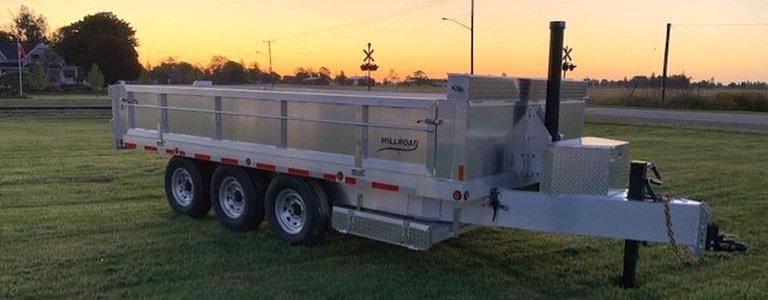
Selecting the right dump trailer depends on your workload and material. Econo models suit light or occasional hauling within specified limits, while Commercial configurations are built for daily mixed loads and heavy-duty demands. Alternatively, Deckover models place the bed above the wheels, offering wider decks ideal for pallets, equipment, and side loading.
Two loads that use the same amount of box space may have very different weights. You need more than a material list to make a useful comparison. Each planned load should be described in the same four ways.
You should also record how often each load will be moved. A material carried every day may shape the purchase more than a heavier load handled once a year.
Landscaping work may involve mulch, soil, sod, leaves, branches, plants, and yard waste. These materials vary greatly in weight and volume. One setup may not handle every landscaping job in the same way.
Dry branches and leaves may fill the box quickly while adding moderate weight. Wet soil and sod can create a heavy load before the box appears full. Moisture, material type, and quantity must therefore be considered together.
You may load by hand during a yard cleanup and use a compact machine during a larger project. Side height, box access, site space, and unloading conditions can all affect daily use. A landscaper who moves material often may also value different features than a homeowner completing seasonal work.
Ask yourself: What is the heaviest landscaping material you expect to move, and how often will you carry it? That answer helps our team compare suitable Econo, Commercial, and Deckover options.
Renovation debris can include drywall, flooring, lumber, cabinets, fixtures, packaging, and broken building materials. The pieces may be bulky, uneven, or difficult to stack. The box can fill faster than expected when long items leave unused spaces.
Sharp edges and odd shapes may also affect how materials are contained. Long lumber or cabinet pieces can rise above the sides even when the load remains below its maximum weight. You need to think about box dimensions as well as payload.
Some renovation projects include tile, concrete pieces, bricks, or heavy plaster. These materials create a much denser load than wood or packaging. Mixed debris should be judged by its heaviest parts rather than the lightest items visible on top.
Ask yourself: Will you mainly move light renovation waste, or will dense demolition material be part of regular work? The answer helps identify the required capacity, box size, and configuration.
Gravel, stone, sand, and other aggregate can become very heavy in a small amount of space. The box may look partly empty even when the load is near a weight limit. This makes aggregate one of the most important tests for a prospective buyer.
Moisture can increase the weight of sand, soil, and similar materials. A visual estimate cannot show the exact load weight. You need known material quantities and reliable weight information before transportation.
Payload, axle ratings, tires, brakes, hitch limits, and tow-vehicle capacity must work together. The hydraulic dumping system and selected configuration must also be suitable for the intended use. Being under one rating does not mean the complete setup meets every limit.
Ask yourself: What is the densest material you plan to carry, and how much will be loaded during one trip? Aggregate may become the deciding load even when you move it less often than other materials.
Old shingles can look like ordinary construction waste, but they create a dense and heavy load. Nails, flashing, underlayment, damaged wood, and packaging may also be placed in the box. Weight can rise quickly during a large tear-off.
The amount removed depends on the roof size and number of existing layers. Wet shingles and roofing material may weigh more than dry waste. You should not choose a setup based only on how the pile looks from the ground.
Roofing projects also involve site-access concerns. The unit may need to fit into a residential driveway while leaving room for workers and other equipment. Overhead wires, branches, soft surfaces, and limited turning space can affect placement.
Ask yourself: How many roofing jobs will the unit support, and what is the largest tear-off you expect to handle? Frequent roofing work may create different capacity and box requirements than occasional cleanup.
Some dump models can also move compact equipment when the exact configuration is designed and rated for that purpose. Possible loads may include a compact mower, small skid steer, mini excavator, or property-maintenance machine. Equipment transport requires a different plan than loose material hauling.
You need the machine’s operating weight, width, length, ground clearance, wheelbase, and attachments. Fuel, fluids, loaded tires, buckets, blades, and other installed parts must be included. A base weight may not reflect the machine as it will be transported.
Suitable ramps, approach angle, deck height, securement points, and firm loading ground all matter. The machine must fit without catching on the loading transition. Its weight must also be placed and secured according to all applicable requirements.
Ask yourself: Will compact equipment be a regular load, and what is the full operating weight of the heaviest machine? If equipment appears often in your workload, deck design and loading access may become major buying factors.
The five-load test shows what you move, but this buyer quiz identifies which needs matter most. You should answer each question based on your real work instead of a job you might take one day. Millroad can use these answers to prepare a more useful quote recommendation.
Your answers create three starting paths. Buyers with mostly lighter and occasional loads can ask us about Econo options. Regular mixed work may point toward Commercial models, while wider loads, equipment, pallets, or side access may lead to a Deckover discussion.
These paths are not automatic model approvals. Our team still needs the expected weights, dimensions, tow-vehicle details, and job needs before recommending a configuration.
Ontario weather can change the weight and condition of a load. Wet soil, frozen material, snow, mud, and soaked renovation waste may create more weight than expected. Seasonal conditions can also make jobsite access harder.
Provincial requirements may depend on vehicle ratings, registered weight, axles, brakes, dimensions, securement, and licence class. You should verify the current rules for your specific combination. Requirements may change based on how and where the equipment is used.
Properties around Brucefield and across rural Ontario may have narrow lanes, soft yards, limited turning space, or uneven ground. Urban renovation and landscaping sites can also provide little room for loading or dumping. The chosen configuration must suit both the material and the places where you work.
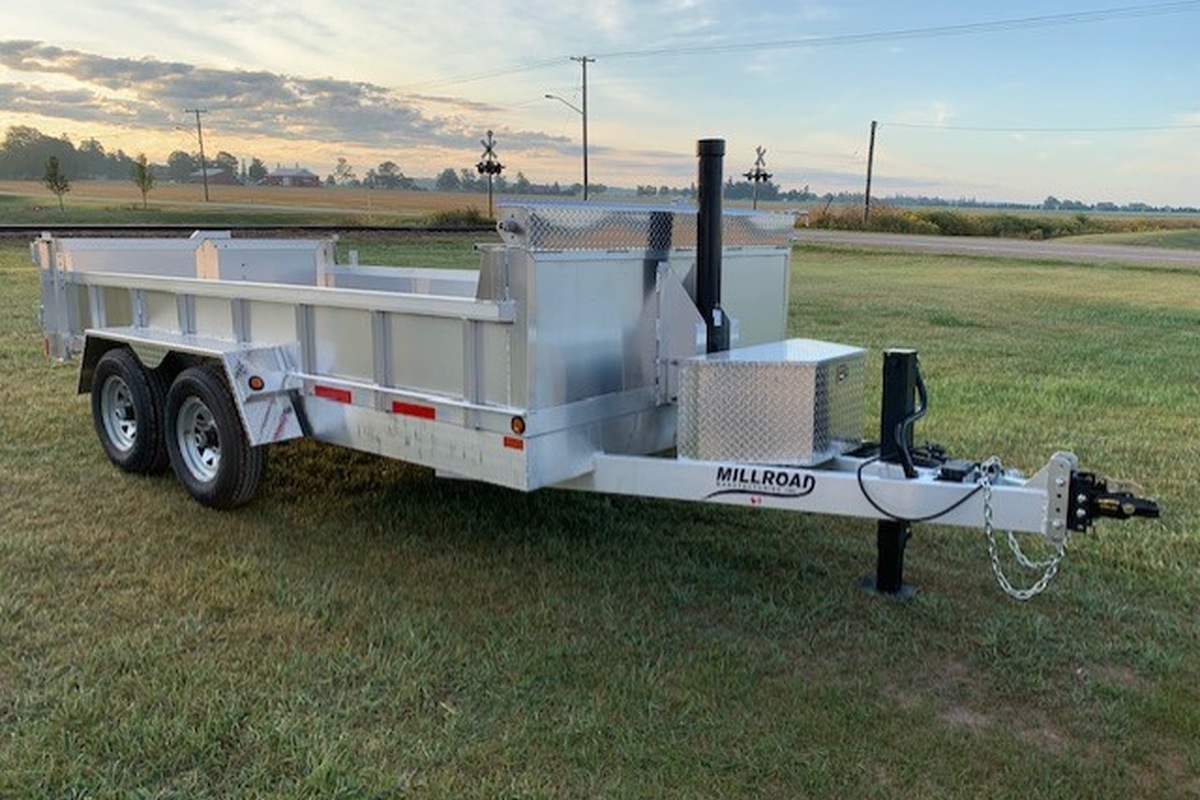
Millroad Dump Trailers are available in Econo, Commercial, and Deckover configurations for different workloads. Each category serves a different starting need, but the final choice depends on the selected size, ratings, features, and tow vehicle. You should compare the exact specifications instead of choosing from the product name alone.
An Econo model may suit lighter or less frequent work when its ratings support the planned cargo. A Commercial configuration may fit regular mixed loads or more demanding business use. A Deckover may provide useful width and access for pallets, equipment, or materials loaded from the side.
At Millroad Manufacturing, we can review your five-load test, work frequency, loading method, unloading sites, and truck details. We then compare these answers with suitable box sizes, axle setups, hydraulic systems, and available features. This process helps you choose around the work you actually perform rather than the largest box you can find.
The right size depends on material volume, load density, work frequency, tow vehicle, and jobsite access. A large box may fill with dense material before reaching the top. You should compare both physical space and payload before choosing.
Yes, when the exact model and complete towing system are rated for the load. Gravel and stone can reach weight limits while the box still looks partly empty. Material quantity, payload, axle ratings, hitch limits, and tow-vehicle capacity must all be checked.
It may be possible when the selected model is designed, equipped, and rated for the machine. You need the equipment’s operating weight, dimensions, ground clearance, attachments, and loading needs. Suitable ramps, securement points, and load placement are also required.
Payload is the permitted cargo weight remaining after the unit’s empty weight is considered. Box volume is the amount of physical space available for material. A bulky load may fill the space first, while dense cargo may reach the weight limit first.
Send us your five load types, estimated weights, work frequency, loading method, tow-vehicle information, and desired features. Include compact equipment measurements if machines will be carried. Our team can then compare suitable Econo, Commercial, and Deckover configurations.
You’re wondering how to choose a dump trailer? The right choice starts with real loads rather than box appearance or product name. Weight, volume, work frequency, loading method, unloading space, and tow-vehicle limits all shape the decision. The model should support your most common work without ignoring the heaviest load you expect to carry.
Landscaping material, renovation debris, aggregate, roofing waste, and compact equipment create different demands. Your most frequent load may determine which features save time, while your densest load may set the required ratings. Testing all five gives you a clearer picture of the configuration you need.
At Millroad Manufacturing in Brucefield, Ontario, we offer Econo, Commercial, and Deckover dump models for different types of work. Complete the five-load buyer quiz and send our team your answers, truck information, and expected cargo weights. We can use those details to compare available configurations and features. Request a quote recommendation and contact us to learn more about choosing a Millroad Dump Trailer for your real workload.