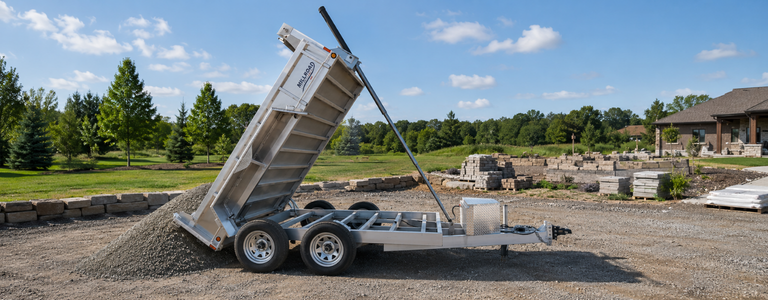
Moving loose materials can take more time than expected, especially when every load must be unloaded by hand. Whether you are transporting topsoil to a landscaping project, clearing debris from a construction site, or moving materials around a farm, a dump trailer can make the work more efficient.
A hydraulic system raises the trailer bed so compatible materials can slide out through the rear. This reduces manual unloading and helps crews prepare for the next load sooner.
Dump trailers are used in landscaping, construction, agriculture, roofing, property maintenance, and seasonal cleanup. The key is choosing a model with the dimensions, weight rating, axle configuration, and features suited to the materials you plan to haul.
A dump trailer is primarily designed to transport and unload loose or bulk materials. Depending on its configuration, it may also carry equipment, tools, supplies, and other secured cargo.
Common dump trailer uses include hauling:
Not every load should be dumped. Machinery, large pieces of furniture, long materials, and irregular objects may need to be unloaded separately. Always confirm that the trailer and dumping method are appropriate for the cargo.
Landscaping businesses routinely move heavy and bulky materials between suppliers, customer properties, and disposal facilities. A dump trailer can be used to deliver new materials and remove waste using the same piece of equipment.
Common landscaping applications include:
Hydraulic unloading can reduce the amount of shovelling required once the trailer reaches the job site. However, the operator still needs to choose a suitable unloading area with enough overhead clearance, stable ground, and room for the material.
Material density is also important. Gravel and wet soil can reach the trailer’s weight limit long before the bed appears full. Leaves and brush, by comparison, may fill the available volume without approaching the same weight.
Construction, demolition, and renovation projects generate materials that need to be moved regularly. A dump trailer gives contractors a mobile hauling option that can travel between job sites.
It may be used for:
A trailer can be repositioned as work moves through different areas of the site. This may be more flexible than using a fixed waste container, particularly for crews that work at several locations.
Before loading construction debris, consider how the material could affect the trailer. Sharp edges, concentrated weight, and falling debris can damage the bed or sides. Loads must also be distributed correctly and secured or covered when required.
Roofing contractors can position a dump trailer near a work area to collect discarded shingles and other debris. This reduces the distance workers need to carry waste and makes cleanup easier at the end of the job.
The trailer must be positioned carefully to protect the property and trailer body. Falling materials can damage landscaping, siding, windows, or the trailer if the work area is not properly planned.
A dump trailer can also help with:
Disposal requirements vary by material, so asphalt shingles, treated wood, metal, concrete, and general waste may need to be separated.
Farms and rural properties often require materials to be moved between fields, barns, storage areas, and disposal locations. A dump trailer can provide a flexible hauling option without dedicating a larger vehicle to every job.
Potential agricultural uses include:
Some agricultural products may require higher sides, covers, liners, or other custom features. Confirm that the selected trailer is suitable for the material and that the load can be contained during transport.
A dump trailer can sometimes serve as an equipment hauler when it has suitable ramps, securement points, dimensions, and weight capacity.
Millroad notes that ramps can be added to certain configurations for transporting equipment such as four-wheelers, skid steers, and mini excavators. This can give contractors, landscapers, and farmers more flexibility from one trailer.
Before loading machinery, verify:
The hydraulic bed should not be used to unload machinery. Equipment must be driven or otherwise removed using an approved procedure.
A dump trailer can also help property owners, municipalities, farms, and maintenance companies manage larger cleanup projects.
Typical seasonal uses include:
Confirm disposal-facility rules before loading. Some locations require materials to be separated, covered, or taken to designated areas.
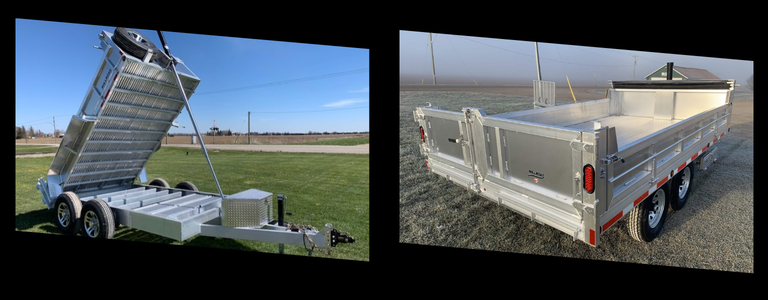
Millroad Manufacturing offers Econo, Commercial, and Deckover dump trailer configurations. Current weight ratings range from lighter-duty Econo models rated up to 7,000 pounds to Commercial models rated up to 21,000 pounds. Deckover models provide a wider 96-inch bed and fold-down sides. These ratings should not be confused with payload, which depends on the trailer’s empty weight and specific configuration. Review Millroad’s current dump trailer options.
When comparing models, consider:
Choosing based only on bed size can lead to overloading. Always compare the trailer’s payload capacity with the real weight of the expected cargo.
Millroad manufactures aluminum dump trailers in Brucefield, Ontario. Aluminum does not rust like steel and can reduce the trailer’s empty weight while still providing a work-ready hauling platform.
Current Millroad dump trailers also feature hydraulic dumping systems and TorFlex axles with EZ Lube components. Millroad lists a five-year warranty and a lifetime warranty on its LED lighting, although customers should review the complete terms and coverage before purchasing.
The trailers can also be customized for different industries and workloads, helping buyers choose a configuration that matches the work instead of adapting a general trailer later.
Capacity varies by model. Check the trailer’s payload, gross vehicle weight rating, axle ratings, and tire ratings. Remember that dense materials such as gravel, concrete, and wet soil can reach the weight limit before the trailer looks full.
It can when the trailer has suitable ramps, tie-down points, dimensions, and payload capacity. Confirm the equipment’s weight and measurements before choosing a trailer.
Dumping on sloped, soft, or uneven ground can create instability. Choose firm, level ground, maintain adequate overhead clearance, and follow the manufacturer’s operating instructions.
Maintenance may include checking hydraulic fluid, hoses, fittings, the battery, electrical connections, axles, tires, brakes, lights, hinges, and latches. Follow the maintenance schedule for the specific trailer and hydraulic system.
A dump trailer can support landscaping, construction, farming, equipment transport, roofing, and property cleanup. Its value comes from matching the trailer to the materials, equipment, and conditions encountered during everyday work.
Millroad Manufacturing offers aluminum dump trailers for lighter property tasks and demanding commercial applications. Contact the Millroad team in Brucefield, Ontario, to discuss your tow vehicle, expected cargo, required capacity, and available custom features.