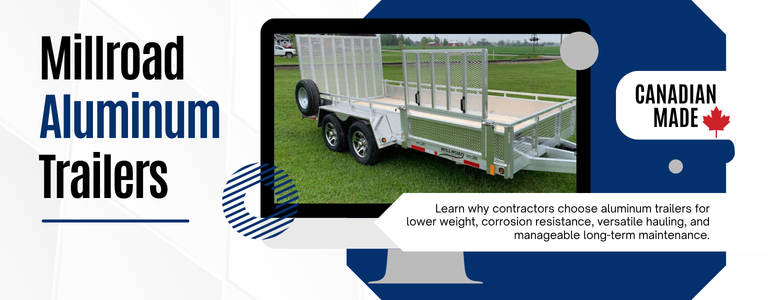
Contractors depend on equipment that can handle busy schedules, changing job sites, heavy cargo, and unpredictable weather. While steel trailers remain common, more contractors are considering aluminum when it is time to replace or expand their hauling equipment.
Why are contractors switching to aluminum trailers? The main reasons include lower trailer weight, corrosion resistance, reduced maintenance, and the potential for stronger long-term value. Aluminum does not make every trailer automatically better, but when the frame, axles, deck, and load capacity are engineered for the work, it can provide an efficient hauling solution for construction, landscaping, agriculture, property maintenance, and industrial services.
One of aluminum’s most significant advantages is its weight. Millroad reports that its aluminum trailers weigh approximately 40% less than comparable steel designs.
A lower empty—or tare—weight may leave more of the trailer’s rated capacity available for cargo. For contractors transporting compact equipment, lumber, tools, or building materials, this can help them make better use of each trip.
However, a lighter trailer does not automatically mean it can carry an unlimited load. Payload is determined by subtracting the trailer’s empty weight from its gross vehicle weight rating. Axle, tire, hitch, brake, and tow vehicle limits must also be considered.
Before choosing a trailer, contractors should know:
Choosing the correct ratings is more important than simply selecting the largest available deck.
Contractor trailers regularly encounter rain, mud, wet materials, road grime, and winter salt. These conditions can cause exposed steel to rust if its protective coating becomes damaged or is not maintained.
Aluminum does not rust in the same way as steel. It forms a natural oxide layer that helps protect the underlying material. This makes aluminum trailers appealing to contractors who work throughout Ontario’s changing seasons or store their equipment outdoors.
Corrosion resistance does not mean maintenance-free. Aluminum trailers still need to be washed, inspected, and serviced. Salt and debris should be removed, especially around fasteners, joints, brakes, wiring, and areas where different metals meet.
The difference is that owners generally do not need to sand and repaint the aluminum frame to control surface rust. That can reduce some of the upkeep associated with a painted steel trailer.
Downtime matters when a trailer is part of a crew’s daily operation. Time spent treating rust, repairing neglected surfaces, or waiting for equipment to return to service can disrupt project schedules.
An aluminum frame can simplify exterior maintenance, but contractors still need to follow a complete inspection schedule. Regular maintenance should include:
No trailer material eliminates the need for proper maintenance. The advantage of aluminum is that corrosion control typically requires less ongoing surface treatment than painted steel.
Reducing the trailer’s empty weight lowers the weight being towed before cargo is added. Depending on the load, route, tow vehicle, traffic, and driving habits, this may contribute to improved towing efficiency.
Contractors should avoid treating fuel savings as guaranteed. Fuel consumption depends on much more than trailer material, including total loaded weight, speed, terrain, wind resistance, tire pressure, engine efficiency, and driver behaviour.
The more practical benefit is flexibility. A lighter trailer may make it easier to stay within the complete towing setup’s ratings while carrying the equipment required for the job. It may also be more convenient to position an unloaded trailer around a yard or storage area.
Safe handling still depends on correct loading, tongue weight, tire pressure, brake adjustment, and driving practices. A lighter trailer that is improperly loaded can be less stable than a heavier trailer with balanced cargo.
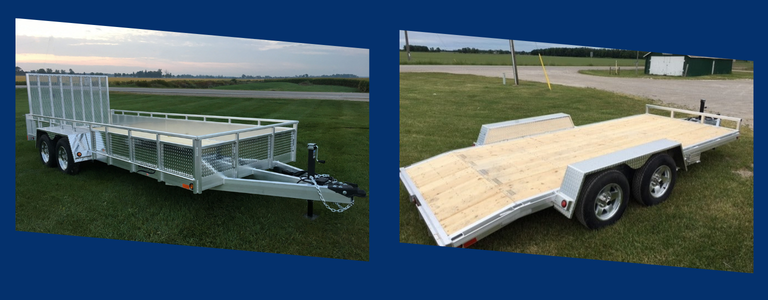
Flatdeck trailers are popular with contractors because their open design provides access from the rear and sides. They can transport a broad range of cargo without the height restrictions of an enclosed trailer.
Common loads include:
Millroad aluminum flatdeck trailers feature a lower deck height, wood flooring, EZ Lube hubs, and available electric or hydraulic brake configurations. Millroad also offers different ramp options, including removable, full-width rear, and rod-mounted ramps.
Available options depend on the specific model and build. Contractors should discuss their largest and heaviest equipment with the manufacturer before deciding on deck dimensions, axles, brakes, ramps, and securement points.
The right trailer should match the way a crew works. A contractor transporting a skid steer has different loading requirements than a landscaper carrying mowers or an industrial service team moving generators and parts.
Useful features may include:
Thoughtful customization can reduce loading delays and make it easier to secure cargo consistently. It can also prevent contractors from paying for features that do not support their actual workload.
Aluminum trailers often have a higher initial price than comparable steel models. Whether the additional cost provides better value depends on how frequently the trailer is used, how it is maintained, and the conditions in which it operates.
Potential long-term benefits include:
Resale value is never guaranteed. It depends on the trailer’s age, condition, specifications, service history, local market, and any damage or modifications.
Contractors should compare the total cost of ownership instead of focusing only on the purchase price. That calculation should include maintenance, repairs, downtime, expected working life, and resale value.
Aluminum is not the best choice for every buyer. Steel can offer a lower upfront cost and may be preferred for certain applications involving concentrated impacts or specialized repairs. Aluminum offers lower weight and better resistance to rust, making it attractive for crews that travel frequently or work in wet and salty conditions.
The best material depends on:
A properly rated trailer made from either material can perform well. The decision should be based on the complete design and the work it needs to do.
Yes, when the trailer is properly engineered and rated for the load. Always compare the equipment’s actual weight with the trailer’s payload, axle, tire, ramp, and deck ratings.
No. Aluminum requires less rust-related surface maintenance than steel, but the trailer still needs regular cleaning, lubrication, inspection, and servicing.
A lower empty weight may leave more of the trailer’s gross vehicle weight rating available for cargo. Payload still depends on the specific trailer configuration and cannot exceed any component or tow vehicle limit.
A lighter trailer may help reduce fuel consumption, but results depend on the total loaded weight, tow vehicle, speed, route, terrain, wind, and driving habits. Fuel savings should not be guaranteed.
Depending on the model and rating, a flatdeck may transport vehicles, compact construction equipment, lumber, landscaping machinery, generators, and palletized materials. Every load must be correctly positioned and secured.
Contractors are switching to aluminum trailers because they combine lower weight, corrosion resistance, versatile configurations, and manageable maintenance. The right trailer can support an efficient hauling setup, but only when its size, payload, ramps, axles, and securement features match the work.
Millroad Manufacturing has designed and manufactured aluminum trailers in Brucefield, Ontario, since 2004. Contact Millroad to discuss your equipment, tow vehicle, typical cargo, and available flatdeck configurations.